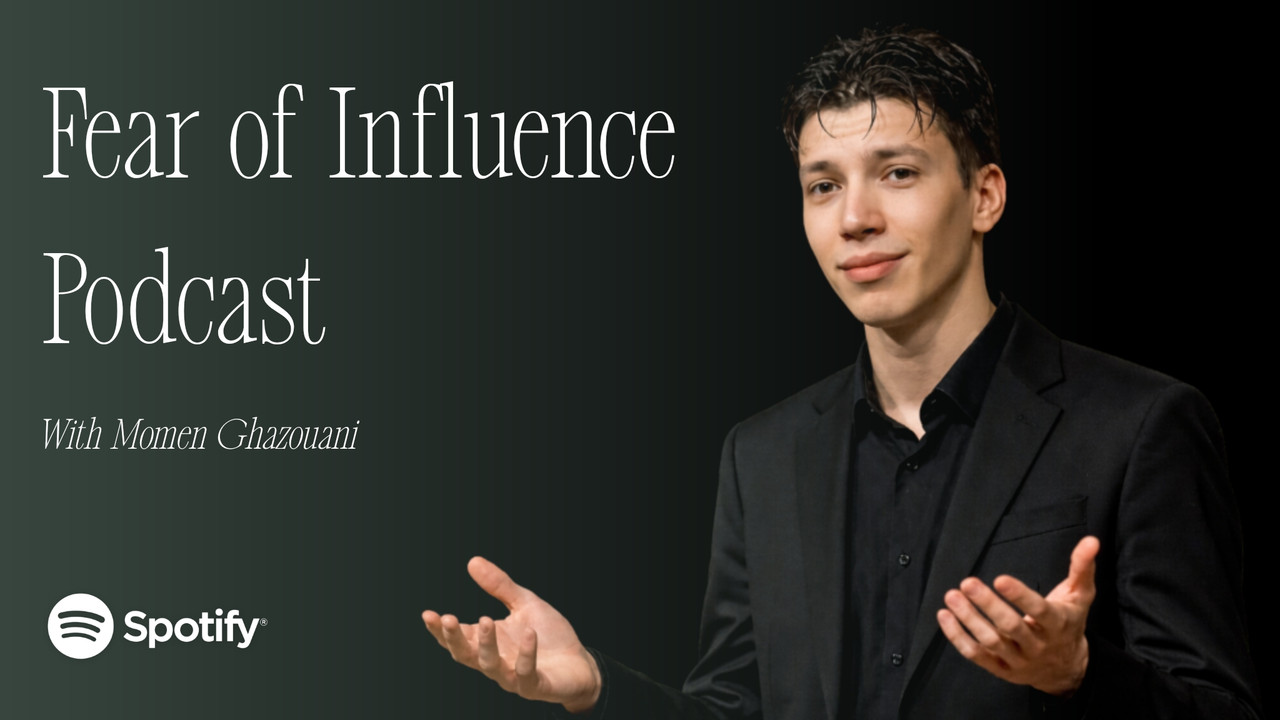

I still remember the moment I realized something fundamental had changed in how we measure human worth. It wasn't during a research session or while reading a study it was when my neighbor's eight-year-old daughter told me, with absolute conviction, that she wanted to be a YouTuber when she grew up. Not a doctor. Not an astronaut. A YouTuber At first, I dismissed it as childhood whimsy. But then the statistics hit me like a freight train: in the United States and Britain, children are now three times more likely to aspire to become content creators than astronauts or entrepreneurs. Three times. Let that sink in for a moment. We've gone from a generation that dreamed of touching the stars to one that dreams of touching a screen and getting likes in return This isn't just a cultural shift. This is a neurological rewiring of what we perceive as valuable, prestigious, and worthy of pursuit. And I believe we need to talk about it not with judgment, but with clarity about what's actually happening beneath the surface
The Dopamine Economy: How Our Brains Got Hijacked
From a neuroscience perspective, what we're witnessing is a fundamental transformation in our reward circuits. The human brain operates through dopamine-driven pathways that historically rewarded genuine achievement completing a research paper, making a scientific discovery, mastering a rare skill, earning a prestigious position. These were delayed gratifications rewards that came after years of effort, failure, and persistence Social media changed the game entirely. It introduced something revolutionary and, frankly, dangerous: instant social validation as a substitute for real accomplishment. A like. A view. A share. Each one triggers a dopamine hit comparable to what our ancestors felt when they successfully hunted or solved a critical problem for their tribe.
But here's the critical difference the old rewards required genuine capability. The new ones require only visibility
I've watched this transformation firsthand, both in my own work and in observing countless others. The brain doesn't distinguish between "I published a groundbreaking paper" and "I got 10,000 likes on a post." At the neurochemical level, both trigger similar reward responses. The prefrontal cortex, the orbitofrontal cortex, the anterior cingulate cortex all these regions light up similarly whether you've achieved something real or simply gained social attention This is what I call the "plasticity of self-evaluation circuits." Our brains have adapted to measure success not by competence, but by visibility. And once this neural pathway is established, it's incredibly difficult to reverse.
The Statistics Tell a Disturbing Story
When we look at why people become content creators today, the numbers reveal something profound about this shift
- - 26% do it for financial income
- - 46% for self-expression
- - 28% to create awareness
On the surface, these seem like legitimate motivations. But when we examine how content creators themselves measure success, we see the real picture:
- - Only 10.70% measure success by financial achievement
- - A mere 2.14% by follower count
- - 17.11% by the quality of followers
- - 1.34% by their ability to create positive impact
Do you see the disconnect? The vast majority entered this space for expression and awareness, yet their actual measurement of success is tied to metrics that have nothing to do with depth, quality, or genuine impact. This isn't self-expression it's self-optimization for an attention economy.
The Content Industry Has Become Our Cultural Mirror
I won't deny that content creation has become the primary stage where human achievement is displayed. From science to art, from literature to craftsmanship, everything now passes through the content creation pipeline. Look at what people are actually creating content about
- - Personal development: 23%
- - Art: 19%
- - Design: 14%
- - Crafts: 13%
- - Mental health: 13%
These are legitimate fields. Important topics. Real human concerns. But here's my problem and I need to be brutally honest about this the vast majority of people creating content about these topics haven't actually lived them. They're not practitioners. They're recyclers
The difference between a content recycler and a genuine practitioner is simple one reads and rephrases, the other fails, reflects, and evolves. The recycler shares others' advice; the practitioner shares lessons born from within
The Crisis of Expertise Without Experience
This is where I need to draw a hard line, and I know this will make some people uncomfortable. What we're witnessing is a new form of intellectual fraud knowledge without wisdom, advice without reality, "experts" without actual expertise I'm not here to attack anyone personally, but I must ask the question that keeps me up at night: Is it ethical to teach something you've never actually lived What I see daily is an endless cycle of recycled content copies taken from books, websites, and other content creators, repackaged with new colors, attractive visuals, and confident voices. But they're hollow at the core. No mind that has experimented. No consciousness that has been tested. No pain or failure that birthed those ideas Let me give you a concrete example. I regularly encounter "productivity experts who have never held a demanding job, "business coaches" who have never built a sustainable business, "relationship advisors" who have never maintained a long-term partnership. They speak with absolute certainty about paths they've never walked, selling maps to territories they've never visited.
The map might be accurate it might even be copied from someone who did walk that path but it lacks the crucial elements that only lived experience can provide: the unmarked dangers, the context-specific warnings, the visceral understanding of what that journey actually feels like.
The Practitioner vs. The Recycler A Fundamental Distinction
I want to be crystal clear about what I mean when I make this distinction, because this is the heart of my argument
The recycler reads, summarizes, and repackages. Their content is technically correct but spiritually empty. They can tell you the "5 Steps to Success" because they read them in a book. They can explain "How to Build Discipline" because they watched videos about it. They can teach The Science of Happiness because they compiled research papers The practitioner, on the other hand, has scars. They've failed repeatedly. They've tested their theories in the real world and watched them collapse. They've rebuilt their understanding from the ground up, incorporating not just what should work, but what actually does work, in all its messy, context-dependent complexity I learned this lesson the hard way in my own work. Early in my career, I would confidently share insights I'd gleaned from research and reading. My presentations were polished, my arguments were logical, my slides were beautiful. But something was missing I could feel it, and so could my audience
It wasn't until I spent years actually implementing these ideas failing, adjusting, failing again, finally succeeding that my work gained what I now call the weight of reality My words changed because my understanding had been forged in experience, not extracted from texts
Speaking about success without living it is like distributing maps to roads you've never walked
The Neurological Trap Why Quick Success Feels Real But Isn't
Here's what makes this situation so insidious from a neuroscience perspective: our brains genuinely cannot distinguish between real achievement and the illusion of achievement provided by social validation When someone gains 100,000 followers quickly by riding trends, posting recycled motivational quotes, or creating shallow value content, their dopamine system responds as if they've accomplished something significant. The anterior cingulate cortex registers the social approval. The ventral striatum processes the reward. The prefrontal cortex adjusts the self-concept to incorporate this success But here's the devastating part: none of the deeper neural circuits that support genuine mastery get activated. The hippocampus isn't building complex, interconnected memories of solving real problems The prefrontal cortex isn't developing the executive function required for deep work. The default mode network isn't engaging in the kind of reflective integration that creates wisdom What you end up with are people who feel successful but are fundamentally hollow. And this explains the epidemic of emptiness I see among content creators who achieve rapid visibility: they hit all the external markers of success, but they lack the internal foundation that makes success meaningful
This is why so many successful content creators report feeling lost, anxious, or fraudulent despite their metrics. Their dopamine system says "you've succeeded," but their deeper cognitive systems know the truth: they haven't actually built anything real
The "Value" Illusion: Commodities Versus Creators
Let me address something that particularly frustrates me: the narrative that content creation changed lives This is technically true, but it obscures a crucial distinction
When we say content creation changed someone's life, we need to ask: how, exactly? Did it change their life because they built genuine expertise, created original value, and established themselves as a legitimate authority? Or did it change their life because they became a commodity a face that brands can use temporarily, discarded when engagement metrics drop or when the algorithm shifts Most of the success stories in content creation fall into the second category. These individuals are essentially advertising products for sponsors. Their value is entirely dependent on maintaining visibility, which means they're trapped in an endless cycle of content production, trend chasing, and algorithm-pleasing
They're not creators they're inventory
Real creation the kind I advocate for is fundamentally different. It means building value through genuine achievement: publishing original research, writing meaningful articles, developing unique insights through lived experience. It means your content emerges from your accomplishments, not as a substitute for them This is what I mean when I insist on the distinction between content creation and content manufacturing Creation implies origination bringing something new into existence. Manufacturing implies assembly putting together existing pieces in slightly different configurations
What Actually Happened The Deep Neural Shift
So what actually changed at the neurological level Why did children stop dreaming of being astronauts and start dreaming of being content creators The answer lies in what neuroscientists call "attention economics and its impact on neural development For years really, for a generation now young people have been immersed in environments where
1. Value is equated with attention
2. Success is measured by visibility metrics
3. Achievement is defined by social proof
4. Identity is constructed through audience response
This isn't just cultural conditioning it's literal neural restructuring. The developing brain builds its reward circuits, its self-evaluation systems, and its goal-setting mechanisms based on the feedback it receives from its environment When that environment consistently rewards visibility over capability, appearance over substance, and quick wins over deep mastery, the brain adapts accordingly. The neural pathways that support delayed gratification, sustained effort, and intrinsic motivation the pathways required for becoming an astronaut or a researcher or an entrepreneur simply don't develop as robustly Meanwhile, the pathways that support social performance audience management, and attention optimization become superhighways This is what I mean when I say the neural pattern itself has changed. It's not that kids today lack ambition or capability it's that their brains have been trained to pursue a different kind of goal entirely
The Path Forward: Reclaiming Deep Work and Deep Value
Now, here's where I want to offer something constructive, because I'm not content with just identifying the problem. I believe there's a way out of this trap, but it requires courage, commitment, and a willingness to swim against the current If you genuinely want to build something meaningful whether you call it "content creation or simply building your life's work you need to start with a fundamentally different approach
First, you need to define your ultimate vision. Not I want to be an influencer or I want to have a million followers." Those are means, not ends. Ask yourself: What do I want to be known for What genuine expertise do I want to develop? What real problems do I want to solve For example, if you see yourself as a future thought leader, your first step shouldn't be posting daily content. It should be producing white papers, research documents, original analyses work that demonstrates genuine thinking, not just content repackaging Let me share something personal here I was once tempted by the quick wins of content manufacturing. I could see how easily I could gain followers by posting recycled insights, trending topics, and digestible summaries The dopamine hits were real. The growth was measurable
But I made a different choice. I committed to what I call Deep work and deep recovery I decided that every piece of content I created had to emerge from genuine investigation, personal experience, or original synthesis. This meant publishing less frequently. It meant smaller initial growth. It meant working in obscurity while others seemed to be making it But here's what happened: the work I produced had weight. People who encountered it could sense that it came from somewhere real. My small audience was engaged, not just scrolling. And over time, this approach built something that quick wins never could have: genuine authority This is what I mean when I invite you to experience the advantages of deep work versus shallow content production. Once you experience the satisfaction of creating something genuinely original, the fulfillment of mastering something difficult, the pride of sharing insights that came from your own journey—you'll find it almost impossible to go back to the shallow end of the pool.
The Uncomfortable Truth About "Success"
I need to close with something that might be hard to hear, but it's crucial: most of what passes for "success" in the content creation world is an elaborate illusion supported by collective delusion
We've created an ecosystem where people with no real expertise can build massive audiences. Where appearance of knowledge substitutes for actual knowledge. Where confidence is mistaken for competence. Where visibility is confused with value And the most troubling part? The system rewards this. It actively promotes shallow, quickly digestible, emotionally manipulative content over deep, challenging, original work But here's what I've learned: the market for genuine value never disappears. It might be smaller. It might be harder to reach. But it's infinitely more sustainable and meaningful The people who succeed in the long term who build lasting influence, create real impact, and look back on their work with genuine pride are almost never the ones who rode trends and recycled content. They're the ones who did the hard work of actually becoming experts, of genuinely mastering their craft, of developing original insights through lived experience
A Call to Consciousness
I'm not here to shame anyone currently creating content the easy way. We're all products of our environment, and the current digital ecosystem makes it almost impossible to resist the pull of quick validation and instant metrics But I am here to issue a challenge: verify before you share. Test before you teach. Live before you lecture If you read something, experiment with it. If you learn something, apply it. And if you want to share it, make sure the value comes from your own understanding, not just from your memory of someone else's words.
This isn't a call for skepticism it's a call for responsibility
We're facing a new kind of crisis: knowledge without wisdom, advice without truth, "experts" without reality. And the only way out is through conscious, deliberate commitment to genuine value creation I won't stay silent while standards of consciousness collapse. This isn't content creation it's illusion manufacturing And I choose to be among those who restore clarity to this space. Even if we start with just thirty people who genuinely care about truth and depth over metrics and visibility, the real impact isn't about numbers it's about integrity The choice is yours. You can continue riding trends, recycling content, and building a following based on appearance. Or you can do the harder, slower work of building genuine expertise and sharing insights that emerge from real experience.
One path offers quick wins and hollow success. The other offers slow growth and meaningful impact.
I know which one I choose. And I know which one will matter in ten years.
The question is: do you have the courage to choose depth over speed, substance over appearance, and genuine creation over endless recycling
Because if you do, if you're willing to commit to the real work of becoming someone worth listening to not just someone who knows how to capture attention—then everything changes Your content stops being a commodity and becomes a contribution. Your presence stops being noise and becomes signal. Your work stops being forgettable and becomes legacy That's the future of content creation I'm working toward. Not one where children aspire to be visible, but one where they aspire to be valuable. Not one where success is measured in followers, but one where it's measured in genuine impact and lasting contribution.
We can build that future. But only if we're willing to reject the current one.
Are you with me ?