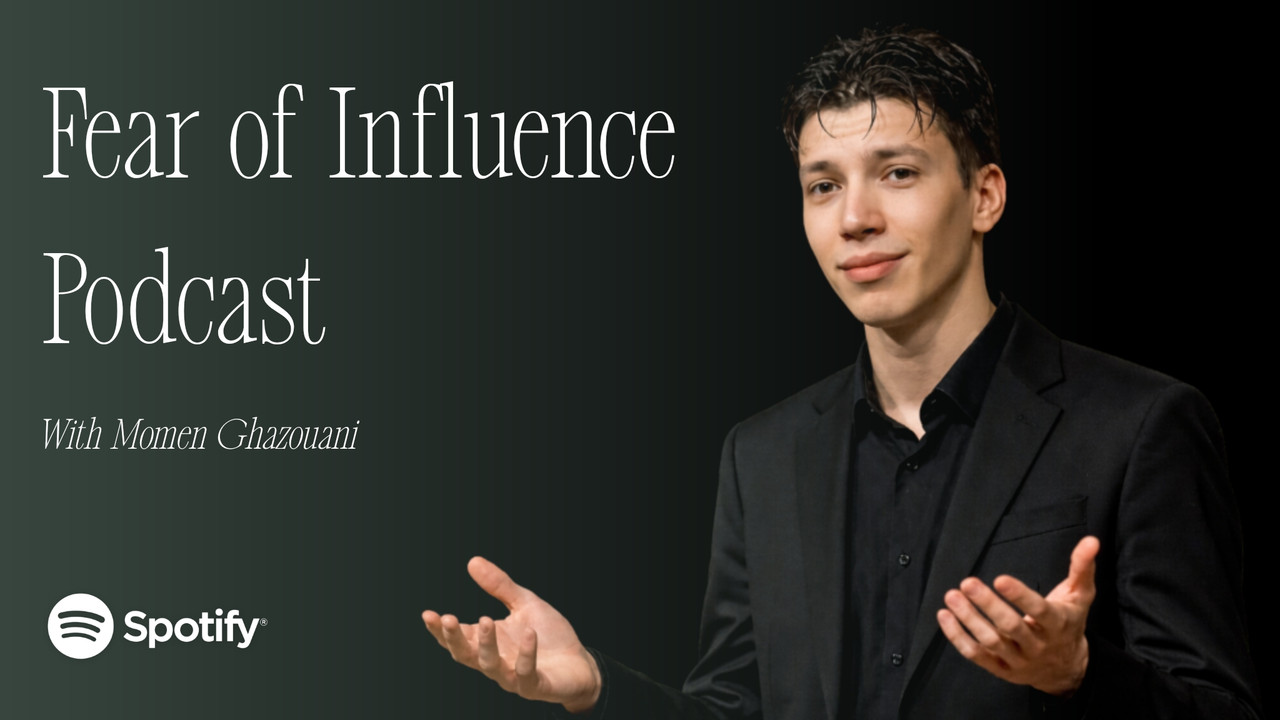

I used to think passion was selfish, and I was perfectly comfortable with that
For years, I chased what set my soul on fire with single-minded determination. I studied what fascinated me, built what excited me, and measured success by how fully I could express my interests in the world. There was a purity to this pursuit, an almost religious devotion to following what felt authentic and alive within me. And honestly, it worked. I achieved things. I gained recognition. I felt the rush of doing what I loved and being rewarded for it
But something was missing, something I couldn't name until the day a stranger's pain cracked open my understanding of what passion could actually become
The quote I wrote, "When your passion becomes a tool to understand the pain of others, you've taken your first step toward true impact," didn't emerge from a moment of inspiration or philosophical contemplation. It came from a specific, uncomfortable realization that my passion, as powerful as it was for me, had been fundamentally incomplete. I had been wielding it like a spotlight pointed inward, illuminating my own path, when it could have been a searchlight reaching into the darkness where others were struggling This shift didn't make me a better person overnight. But it fundamentally changed the trajectory of my work and, if I'm honest, the depth of my own fulfillment. Let me explain what I mean, and more importantly, why this matters for anyone who's ever felt the fire of genuine passion.
The Seductive Trap of Pure Passion
Let me address the obvious tension immediately: isn't passion supposed to be personal Isn't the whole point of discovering what you're passionate about to honor your authentic self, to pursue what makes you come alive, regardless of what others think or need
Yes and no.
The contemporary narrative around passion, especially in Western individualistic culture, treats it almost like a personal destiny that exists independent of context or community. We're told to follow our passion to "do what we love," to "find our calling" as if these things exist in a vacuum, waiting to be discovered and expressed purely for our own satisfaction I bought into this completely. I thought my passion for storytelling, for analyzing human behavior, for crafting narratives that made complex ideas accessible existed to serve my creative fulfillment. And for a while, that was enough. I wrote pieces I was proud of, developed a voice I felt was authentically mine, and received validation that felt meaningful But here's what nobody tells you about pure, self-directed passion: it eventually hollows out. Not immediately, and not obviously, but gradually you begin to sense that you're speaking into an echo chamber of your own interests. You're building elaborate structures of insight and creativity that primarily serve your need to express rather than anyone's need to receive
The turning point for me came during a speaking engagement where I delivered what I considered one of my strongest presentations. Afterward, a woman approached me not with praise, but with a question that stopped me cold That was beautifully said, but do you understand what it's like to live what you're talking about She wasn't being cruel. She was being honest. And in that moment, I realized I had been so focused on the elegance of my ideas that I had become disconnected from the lived reality of the people I was supposedly serving. My passion had made me articulate, but it hadn't made me understanding
The Bridge Between Passion and Pain
What does it actually mean to turn passion into a tool for understanding others' pain? This isn't about abandoning what makes you come alive or martyring yourself to others needs. It's something more subtle and, I'd argue, more powerful It means taking the intensity, focus, and energy you naturally bring to what you're passionate about and deliberately redirecting some of that current toward the experiences of others, especially their struggles, frustrations, and unmet needs that might intersect with your domain of passion When I'm passionate about communication, that passion gives me energy to study rhetoric, to practice writing, to analyze effective messaging. But when I transform that passion into a tool for understanding, I use that same energy to ask different questions: What makes communication break down? Where do people feel unheard What pain results from being chronically misunderstood How does my understanding of language dynamics help me recognize when someone's words don't match their emotional reality
The shift is from How can I get better at this thing I love to How can what I love help me see and respond to what others are experiencing
I think of a musician I know who was technically brilliant, conservatory-trained, passionate about complex compositions. She could make her instrument sing in ways that left audiences in awe. But something changed when her father developed dementia and she watched him lose access to language but retain connection to music. Her passion shifted from performance excellence to understanding how music could bridge the isolation of cognitive decline. She began playing in memory care facilities, not to showcase her skill, but to reach people where words couldn't go Her technical ability didn't diminish. If anything, it deepened because it was now in service of something beyond aesthetic achievement. She told me once I used to play to make people feel something. Now I play to understand what they're already feeling and can't express That's the transformation I'm talking about As the psychiatrist and Holocaust survivor Viktor Frankl wrote in his profound work on meaning, "Being human always points, and is directed, to something or someone, other than oneself." What he understood, what I've come to understand, is that our deepest fulfillments, including the exercise of our passions, find their truest expression not in self-contained pursuit but in self-transcending connection
Why Understanding Pain Specifically
You might ask why I emphasize understanding pain specifically, rather than joy, aspiration, or potential. Why not say, "When your passion becomes a tool to celebrate others' victories" or "to amplify others' dreams The answer is uncomfortable but true: pain is the great equalizer and the ultimate teacher. Pain strips away pretense, exposes what actually matters, and creates the conditions for genuine connection in ways that success and happiness rarely do
When I use my passion to understand someone's pain, several things happen that don't occur in more comfortable interactions
I'm forced to listen rather than perform Pain doesn't need my clever insights or impressive demonstrations of skill. It needs presence, patience, and genuine attention. This naturally corrects the self-referential tendency that passion can create.
I encounter the limits of my understanding No matter how passionate I am about a subject, someone else's pain in that domain will teach me dimensions I hadn't considered. This keeps me humble and learning, rather than assuming my passion has made me an expert on all aspects of a topic
I discover unexpected applications for my capabilities Pain reveals needs that aren't obvious from the outside. When I take time to understand someone's struggle, I often discover that my passion can serve in ways I'd never have imagined if I was only focused on conventional applications
I build trust that transcends transactional exchange When someone senses that I genuinely understand their pain, not because I'm trying to sell them something or impress them, but because I've taken the time to see their reality through the lens of what I know and care about, a different quality of relationship becomes possible
I remember working with a client who was struggling to grow their business. My passion is organizational systems and strategic thinking. I could have (and initially did) approach this as a problem to solve with frameworks and optimization. But when I slowed down and really listened to the pain underneath the surface issue, I discovered something different: this person was terrified of success because it would mean leaving behind an identity they'd held for decades. The business problem was real, but it was secondary to an identity crisis My passion for systems didn't become irrelevant. But it transformed from a hammer looking for nails into a lens that helped me see the full picture of what this person needed. We still addressed the business systems, but we did it in a way that honored the deeper pain driving the surface problem. That's what I mean by passion becoming a tool for understanding
The Practical Mechanics of Transformation
Understanding this conceptually is one thing. Living it requires specific practices, and I want to be concrete about what's worked for me because abstract inspiration isn't enough
First, I've learned to deliberately seek spaces where pain related to my passion is present
If you're passionate about education, spend time with students who are failing or parents who feel helpless. If you're passionate about design, engage with people who are frustrated by poorly designed systems they must navigate daily. If you're passionate about technology, talk to those being left behind by digital transformation This isn't disaster tourism. It's not about feeling better about yourself by comparison or collecting stories of suffering. It's about exposing yourself to the full reality of the domain you care about, including and especially the parts that aren't working for people
Second, I've developed what I call empathetic curiosity This is different from problem-solving mode or advice-giving mode. It's the practice of asking questions designed purely to understand someone's experience more fully, without any agenda to fix, teach, or redirect
Questions like What's the hardest part of that for you What have you tried that hasn't worked What would you want someone in my position to understand about your situation What do you wish existed that doesn't
These questions have taught me more about the real-world applications of my passions than any book or course ever could. They've revealed gaps in my thinking, blind spots in my approach, and opportunities I'd never have recognized from inside my own perspective
Third, I've made it a practice to regularly translate between my passion and others' pain
This means taking concepts, tools, or insights from my domain of passion and actively working to frame them in terms of the specific struggles people have shared with me
For instance, if I'm passionate about effective communication and someone has shared with me their pain about being chronically misunderstood at work, I don't just give generic advice. I use my deep knowledge of communication dynamics to identify the specific breakdown in their situation, perhaps they're high-context communicators in a low-context environment, and offer precise, tailored insight that addresses their particular pain point
This translation work forces me to constantly bridge between abstract knowledge and lived experience. It keeps my passion grounded and relevant rather than academic and disconnected.
When Understanding Transforms Into Impact
Here's the progression I've observed, both in myself and in others who've made this shift from passion as self-expression to passion as understanding
Stage One Competence You develop skill in what you're passionate about. You can do the thing well. This is necessary but insufficient for impact.
Stage Two Recognition Others acknowledge your skill. You build a reputation. You're known for what you can do This feels validating but can be surprisingly empty.
Stage Three Understanding You begin using your passion to genuinely comprehend others' experiences, especially their struggles and pain points in the domain you care about. This is where meaning begins to emerge
Stage Four Relevance Because you understand deeply, what you offer becomes precisely relevant to real needs rather than generic or theoretical. People don't just admire your work; they feel seen by it
Stage Five Impact Your passion, now filtered through genuine understanding and applied with relevance, creates tangible change in others' lives. This is qualitatively different from earlier success because it's measured not by your achievement but by others' transformation
I've experienced all five stages. The first two were ego-gratifying but ultimately hollow. The last three have been harder, more humbling, and infinitely more fulfilling. The moment I stopped trying to impress people with my passion and started trying to understand them through it, everything changed not just for those I served, but for me As the author and activist Parker Palmer observed, "Before I can tell my life what I want to do with it, I must listen to my life telling me who I am." What I'd add to that wisdom is this: Before I can tell others what my passion can do, I must listen to their lives telling me what they actually need.
The Gifts That Come From This Shift
I won't pretend this transformation is easy or that it doesn't cost something. Using your passion to understand pain means exposing yourself to suffering you could avoid. It means complicating your simple love of a subject with the messy reality of how that subject intersects with human struggle. It means letting go of some control over how your passion expresses itself
But the gifts that come from this shift are profound and lasting
You develop a depth of expertise that surface-level practitioners can't match When you understand not just the theory of your passion but how it lives and breathes and sometimes fails in real human contexts, you gain insight that no textbook provides
You build relationships based on genuine value rather than transactions People who feel understood become not just clients or followers but partners, advocates, and friends. They invest in your success because they've experienced your investment in understanding them
You access a source of motivation that doesn't depend on external validation When your passion is directed toward understanding and serving others' real needs, you're less vulnerable to the whims of praise or criticism. The work itself becomes the reward because you can see its effect
You discover dimensions of your passion you didn't know existed Pain reveals nuance. When I began using my communication skills to understand why people struggle to be heard, I discovered entire subfields within my passion that I'd never encountered in formal study, the role of trauma in communication patterns, the intersection of identity and expression, the ways power dynamics shape who gets listened to Most importantly, you experience the kind of fulfillment that comes only from knowing you've genuinely mattered to someone. Not because you impressed them or entertained them, but because you understood them, and that understanding translated into something that eased their burden, opened a possibility, or simply made them feel less alone.
Living at the Intersection
So how do I actually live this daily ? How do I maintain the fire of my passion while keeping it directed toward understanding rather than self-expression
I've settled into a rhythm that works for me: I protect time for pure pursuit of my passion, for learning and growing and exploring just because something fascinates me. This keeps the flame alive. But I also schedule regular immersion in contexts where my passion intersects with others' pain, conversations with people struggling in my domain, exposure to problems I'm equipped to understand but haven't solved The key is holding both. Pure passion without the grounding of others' pain becomes self-indulgent and disconnected. Constant exposure to pain without the rejuvenation of pure passion leads to burnout and compassion fatigue. The intersection is where the magic happens, where your fire meets their need and creates something neither of you could have generated alone This has become my definition of true impact: not the size of my audience or the recognition I receive, but the specific, particular difference my understanding makes in individual lives. When someone tells me, "You got it. You really understood what I was going through that's when I know my passion has transcended personal pursuit and become something more
And here's what I've learned that I wish I'd known years ago: this doesn't diminish your passion. It doesn't make your work less yours or your expression less authentic. It makes everything richer, deeper, more textured with meaning. You're still doing what you love, but now what you love is doing something beyond you, and that's when passion becomes legacy When your passion becomes a tool to understand the pain of others, you've taken your first step toward true impact. Not because understanding pain is the end goal, but because it's the bridge between what moves you and what matters to the world. And walking that bridge, however uncertain or uncomfortable, is where your passion finally finds its purpose.